
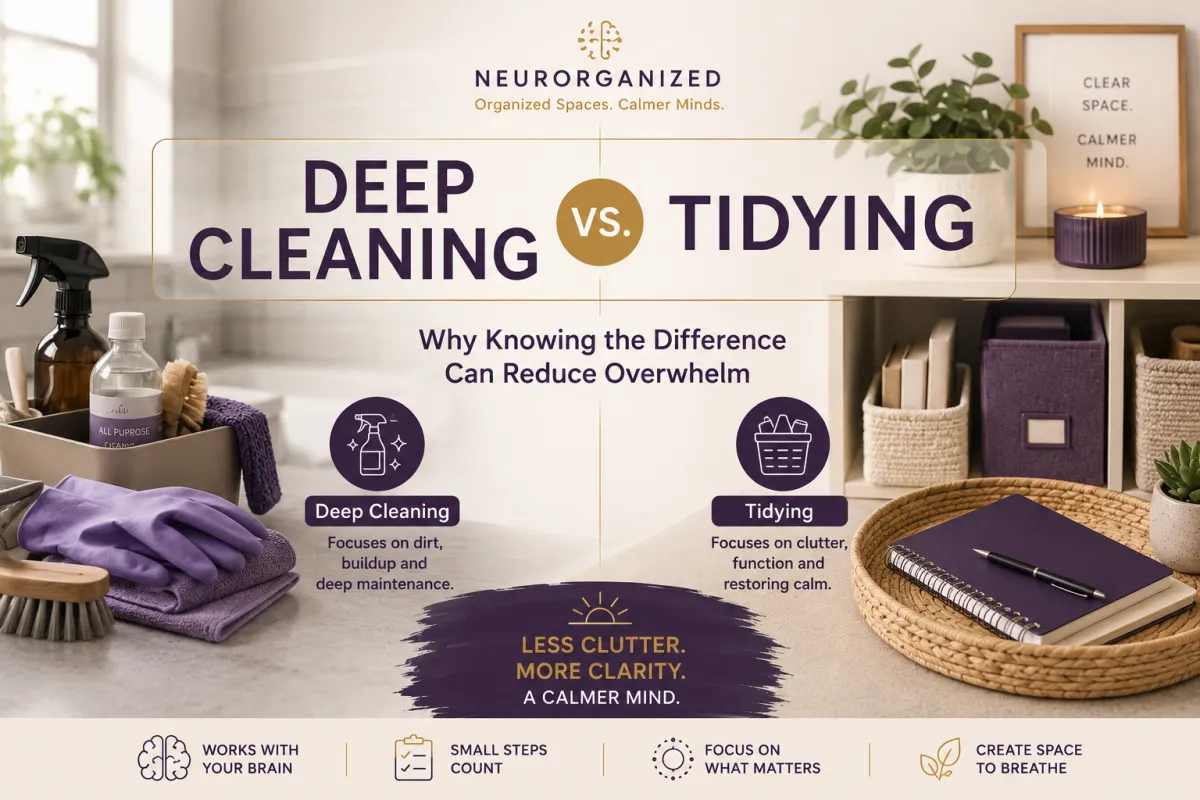
Deep Cleaning vs Tidying, Why Knowing the Difference Can Reduce Overwhelm
Sometimes the mess isn’t actually dirt, it’s simply too much visual noise.
If you have ever looked around your home and instantly felt overwhelmed, you are far from alone. Many people reach a point where the dishes pile up, laundry multiplies, counters disappear beneath “temporary” clutter, and suddenly the entire house feels impossible to manage.
In those moments, most of us tell ourselves the same thing:
“I need to clean.”
But here is something that may completely change how you think about your space:
Cleaning and tidying are not the same thing.
Understanding the difference between the two can reduce overwhelm, create a calmer environment, and help you work with your brain rather than against it. This is especially true for neurodivergent individuals, busy households, and anyone feeling mentally overloaded by everyday life.
At NEURORGANIZED, we believe organization should feel supportive, practical, and realistic. Your home does not need to be perfect to feel peaceful. Often, relief starts with understanding what your space actually needs.
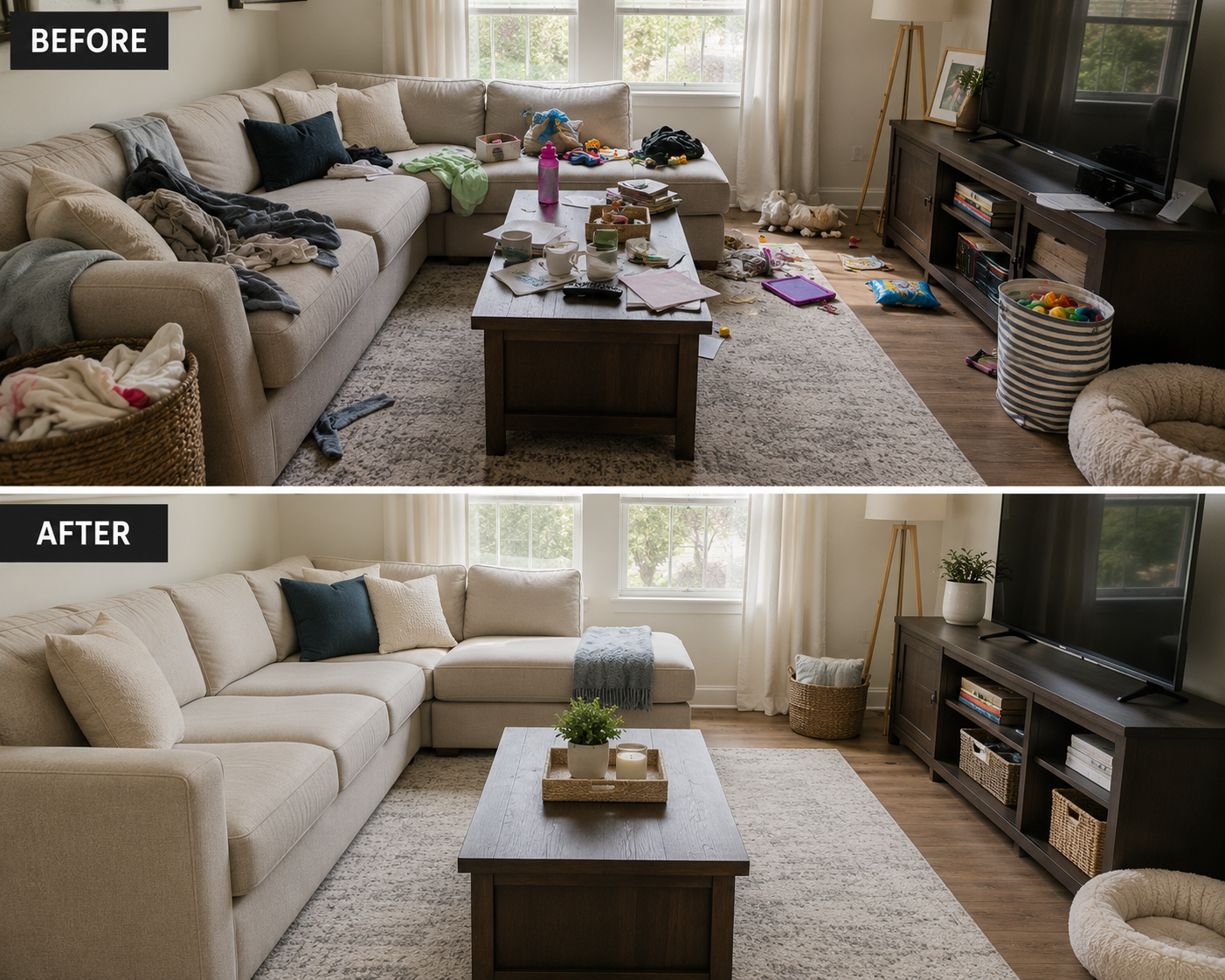
What Is the Difference Between Deep Cleaning and Tidying?
Although people often use the terms interchangeably, deep cleaning and tidying serve completely different purposes.
Tidying is about restoring function and reducing visual overwhelm. It focuses on resetting spaces so they feel calmer, easier to use, and less mentally draining. Deep cleaning, on the other hand, focuses on sanitation and maintenance. It addresses dirt, buildup, dust, and the less visible aspects of keeping a home healthy.
Think of tidying as creating mental breathing room, while deep cleaning creates physical cleanliness.
Tidying is for Restoring Calm and Function Quickly
Tidying focuses on putting life back into order after the natural chaos of daily living.
This might look like clearing a bathroom counter that has accumulated products, returning shoes to their place by the door, putting toys back into baskets, tossing trash, or folding blankets in the living room. Tidying is often less about perfection and more about creating an environment that feels manageable again.
For many overwhelmed people, this step alone can make a dramatic emotional difference.
You may notice that after simply picking things up and reducing clutter, a room suddenly feels lighter, calmer, and easier to exist in. Even if nothing has technically been “cleaned,” your brain experiences less visual stress.
Deep Cleaning is for The Maintenance Side of Home Care Over Time
Deep cleaning involves the tasks we often postpone because they require more energy, time, and executive function.
This includes scrubbing showers, disinfecting surfaces, washing baseboards, cleaning under furniture, deep cleaning appliances, dusting neglected areas, or tackling stubborn buildup in kitchens and bathrooms.
Deep cleaning absolutely matters. However, it is also significantly more demanding, especially during busy or mentally exhausting seasons of life.
One of the biggest mistakes people make is believing they need to deep clean before their home can feel better.
In reality, many spaces begin to feel dramatically more peaceful after a simple tidy.
Why Clutter Feels So Mentally Loud
If clutter feels emotionally overwhelming to you, there is a scientific reason for that.
Our brains are constantly processing information from our environment. Every unfinished pile, every object out of place, every visible reminder of something we “should” be doing quietly asks for mental attention. Even when we are not consciously thinking about the mess, our nervous system often still notices it.
For neurodivergent minds especially, this can feel amplified.
Individuals with ADHD, autism, sensory sensitivities, anxiety, or executive functioning differences may experience visual clutter as more overstimulating or mentally draining. A cluttered room can quickly become more than just a messy space — it can begin to feel emotionally heavy.
Research supports this connection between our environment and stress levels. A study published in Personality and Social Psychology Bulletin found that women who described their homes as cluttered or unfinished experienced higher levels of stress and depressive mood throughout the day. The way we experience our environment can subtly shape how regulated, calm, and capable we feel.
You can reference the study from the American Psychological Association: “Home Is Where the Stress Is: Expanding the Role of Chronic Stress” by Darby Saxbe and Rena Repetti.
This does not mean clutter makes someone lazy, unsuccessful, or incapable.
It means our spaces affect our nervous systems more than we often realize.
Why Tidying First Often Works Better Than Deep Cleaning
When people feel overwhelmed by their home, they often imagine needing an entire free weekend, endless motivation, or a complete life reset to make progress.
That expectation alone can create paralysis.
Tidying works differently.
Instead of demanding perfection, tidying offers quick wins. It creates momentum.
Rather than telling yourself:
“I need to clean the whole kitchen.”
You can shift toward:
“I am only resetting the counter.”
Instead of:
“My bedroom is a disaster.”
Try:
“I am just putting visible clutter away for ten minutes.”
Psychologically, this makes an impact on productivity.
When our brains feel overwhelmed, large tasks often trigger avoidance. Smaller, clearly defined actions are easier for the nervous system to tolerate. Every visible improvement creates a sense of accomplishment, which helps rebuild motivation and emotional safety.
In many cases, once a room feels tidier, deep cleaning naturally becomes easier because the mental resistance has decreased.
Start With the Spaces That Feel Loudest
Every home has what we like to call Hot Spots.
These are the places where clutter quietly piles up until suddenly it feels impossible to ignore. The kitchen counter that becomes a catchall for mail and random objects. The bathroom sink surrounded by products. The bedroom chair that slowly transforms into a laundry mountain. The kids’ room that somehow looks tornado-tested by lunchtime.
These spaces matter because they often carry disproportionate mental weight.
When your visual “hot spots” feel chaotic, your entire home can start to feel heavier than it really is. The BIG win here, is you do not need to organize your entire house overnight.
Sometimes relief begins with one small reset.
One drawer... One counter... One corner... One visible win.
Your Home Does Not Need to Be Perfect
At NEURORGANIZED, we believe organization should support your life, not shame you for living it.
Your home does not need to look magazine-worthy to deserve peace.
It simply needs to feel functional, supportive, and safe enough for your nervous system to rest.
Looking for a Small Win?
If getting started feels overwhelming, our Hot Spot Reset Checklist was designed specifically for the everyday “tiny explosions” that happen in real homes.
Rather than tackling your entire house at once, these psychology-informed reset checklists help you focus on one manageable space at a time, whether that is your bathroom, kitchen, primary bedroom, living room, or kids’ room.
The goal is simple, less overwhelm, more calm, and small wins that build momentum.
Start where the stress feels loudest and let the relief build from there.
Want to Learn How Your Brain Organizes Best?
Not everyone processes information the same way, which means organization should never be one-size-fits-all.
Some people thrive with visual systems. Others need flexibility, simplicity, structure, or dopamine-friendly routines to stay consistent.
If you have ever wondered why certain organizing advice never seems to “stick,” your brain may simply process the world differently.
Take the NEURORGANIZED NeuroType Quiz to discover how your mind naturally approaches motivation, systems, clutter, and information processing, so you can create routines that actually work for you, not against you.
If you love content like this, consider joining our monthly NeuroSpicy Newsletter delivered to your inbox with more tips, community-driven content, and monthly resource drops so you don't have to navigate this experience alone.
